
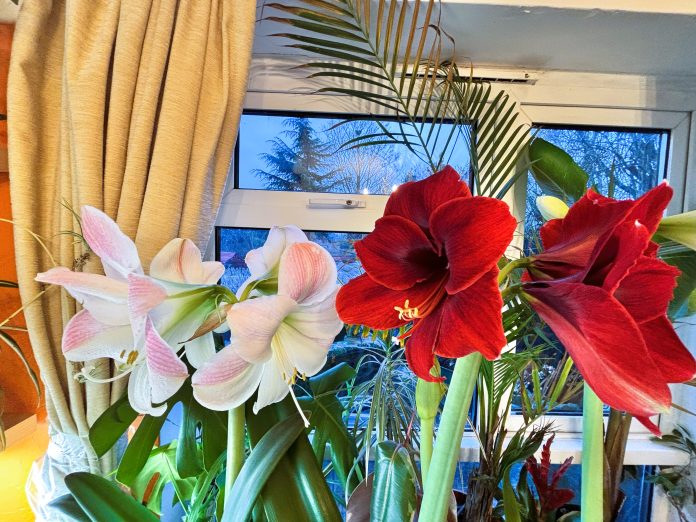
Amaryllis (Hippeastrum) Grow Guide – Botanical Overview
Family: Amaryllidaceae
Genus: Hippeastrum
Origin: Tropical and subtropical regions of Central and South America
Common Name: Amaryllis (UK horticulture)
Type: Bulbous perennial
Botanical Description
- Bulb: Large, tunicate, ovoid, 10–15 cm in diameter; storage organ for carbohydrates and nutrients.
- Leaves: Strap-shaped, glossy green, arising after flower emergence in many cultivars.
- Flowers: Solitary or in umbels, funnel-shaped, 12–20 cm long; six tepals often vividly colored with stripes or patterns.
- Reproductive Structures:
- Male (Stamens): Filament + anther, pollen-producing.
- Female (Pistil): Stigma (receptive surface), style (elongated stalk), ovary (inferior, trilocular), containing ovules.
Cultivation Requirements
Light
- Indoors: Bright, indirect sunlight. South- or west-facing windows ideal.
- Outdoors (summer): Full sun to partial shade. Protect from scorching midday sun in hot regions.
Temperature / Hardiness
- Optimal growth: 18–24°C during active growth.
- Flowering: Slightly cooler nights (15–18°C) promote bud formation.
- Hardiness: USDA zones 9–11 (tender bulb).
- UK cultivation: Typically grown in pots, overwinter indoors at 10–15°C.
Soil
- Type: Well-draining, fertile loam or general-purpose potting mix.
- Composition: Incorporate sand or grit to improve drainage. Avoid heavy clay or waterlogged soils.
- pH: Neutral to slightly acidic (6.0–7.0).
Watering
- Keep moderately moist during active growth.
- Reduce watering after flowering as bulb enters dormancy.
- Avoid wetting the crown to prevent rot.
Fertilization
- Active growth (spring-summer): Balanced, water-soluble fertiliser (NPK 10:10:10) every 2–3 weeks.
- Bulb storage: Do not fertilise during dormancy.
Propagation
- Seed: Slow, 3–5 years to flowering.
- Offsets (bulblets): Faster method, clone parent traits.
Dormancy
- Essential for flowering the following season.
- Leaves naturally die back 6–8 weeks post-flowering.
- Store bulbs dry and cool (10–15°C) for 8–12 weeks.
Month-by-Month Cultivation Guide (UK / Pot-Grown)
| Month | Task |
|---|---|
| Dec–Jan | Initiate growth indoors; warm, bright site; start light watering. |
| Feb | Flowering; rotate pots for even bloom; stake tall stems. |
| Mar | Post-flowering; deadhead blooms; allow leaves to develop. |
| Apr–May | Active leaf growth; begin fortnightly feeding; repot if necessary. |
| Jun–Aug | Outdoors if frost-free; maintain watering and feeding; ensure full sunlight. |
| Sep | Reduce watering; prepare for dormancy. |
| Oct–Nov | Leaves yellow; cut back; store bulbs dry in cool conditions. |
Pests and Diseases
- Common pests: Aphids, spider mites, mealybugs.
- Fungal issues: Bulb rot from waterlogging; red blotch (Stagonospora curtisii).
- Control: Good air circulation, well-draining media, inspect bulbs before storage.
January
- Most amaryllis are in flower now.
- Keep plants in a bright, warm room (18–22°C).
- Water sparingly but regularly – don’t let the compost dry out completely.
- Turn the pot every few days so the flower stem grows straight.
- Stake tall flower stems if needed.
February
- Flowers begin to fade.
- Deadhead spent blooms, but do not cut the stem until it yellows.
- Continue watering lightly.
- Keep in good light to support the leaves forming next.
March
- Flower stems die back naturally – now you can cut them off.
- Leaves should be growing strongly.
- Start feeding every 2 weeks with a balanced liquid fertiliser.
- Water more freely as growth increases.
April
- Strong leaf growth.
- Continue feeding fortnightly.
- If rootbound, repot after flowering into a pot only slightly larger.
- Use free-draining compost (multi-purpose with added grit).
May
- Once frost risk has passed, pots can go outside.
- Place in a sheltered, sunny spot.
- Water regularly and feed every 2 weeks.
- This is when the bulb rebuilds energy for next year’s flowers.
June
- Peak leaf growth.
- Keep watering and feeding.
- Remove weeds and ensure good airflow if outdoors.
- Avoid waterlogging – bulbs hate sitting wet.
July
- Continue as June.
- Leaves should be lush and strap-like.
- A lack of feeding now = no flowers next year.
August
- Gradually reduce feeding towards the end of the month.
- Keep watering but slightly less often.
- Bulb is finishing its energy storage phase.
September
- Begin rest period preparation.
- Stop feeding completely.
- Reduce watering significantly.
- Move pots under cover if outdoors.
October
- Leaves yellow and die back.
- Stop watering.
- Cut leaves off once fully yellow.
- Store bulbs cool and dry (10–15°C), in their pots or lifted.
November
- Bulbs remain dormant.
- Keep dry and cool.
- No watering at all.
December
- Time to restart growth for winter flowers.
- Move bulb to warmth and light.
- Start watering lightly.
- Flower buds usually appear before leaves.
Quick Growing Tips
- Pot size: snug pots encourage flowering.
- Light: bright light is essential, especially after flowering.
- Feeding: the most common mistake is not feeding enough after flowering.
- Botanical note: Amaryllis sold in the UK are usually Hippeastrum, not true Amaryllis belladonna.