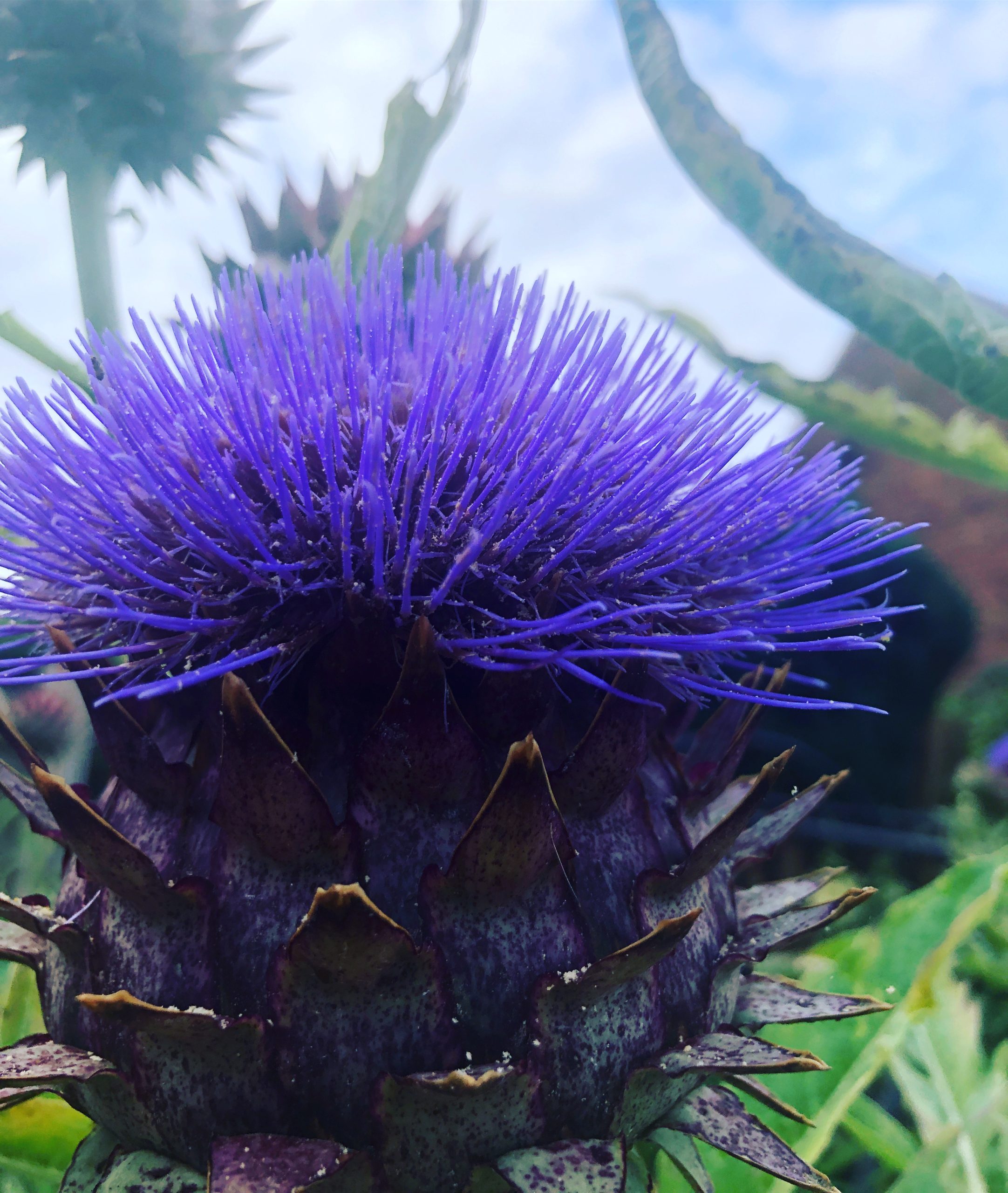
Cardoons (Cynara cardunculus) can be relatively easy to grow, especially if you have some gardening experience and the right conditions. Cardoons come in several varieties, each with distinct characteristics. Here are some popular varieties:
1. ‘Gigante di Romagna’
- Description: This is a large variety known for its robust growth and thick, meaty stems.
- Origin: Italy
- Uses: Ideal for blanching and eating the tender inner stalks.
2. ‘Porto Spineless’
- Description: As the name suggests, this variety has fewer spines, making it easier to handle and harvest.
- Origin: Portugal
- Uses: Popular for its tender stems and ease of preparation.
3. ‘Red Cardoon’ (Cynara cardunculus var. altilis)
- Description: This variety features striking red or purple-tinged stems and foliage.
- Origin: Likely a cultivated variety selected for its color.
- Uses: Adds ornamental value to gardens and is also edible.
4. ‘Cardon Plein Blanc Inerme’
- Description: A French variety known for its broad, white, and tender stalks.
- Origin: France
- Uses: Excellent for blanching and cooking, known for its mild flavor.
5. ‘Gobbo di Nizza’
- Description: This variety is known for its curved, ribbed stems that are tender and flavorful.
- Origin: Italy
- Uses: Often used in Italian cuisine, especially for braising and frying.
6. ‘Tunisian Cardoon’
- Description: A variety adapted to warmer climates, with robust growth and thick stems.
- Origin: Tunisia
- Uses: Commonly used in Mediterranean cooking.
Growing Tips for Different Varieties
- Climate Adaptation: Choose a variety suited to your local climate. For example, ‘Tunisian Cardoon’ might be better for hot, dry areas, while ‘Gigante di Romagna’ could thrive in milder conditions.
- Blanching Needs: Some varieties require more extensive blanching for the best flavor, such as ‘Cardon Plein Blanc Inerme’.
- Pest Resistance: ‘Porto Spineless’ is often preferred for its ease of handling and reduced spines, which can also make it less prone to pests that target the spiny foliage.
By selecting the right variety for your garden conditions and culinary preferences, you can enjoy both the visual appeal and unique flavors of cardoons.
Growing Conditions
- Climate: Cardoons thrive in Mediterranean climates. They prefer mild winters and hot summers. They can tolerate light frosts but may need protection in colder regions.
- Soil: They prefer well-drained, fertile soil. Adding compost or organic matter can improve soil quality.
- Sunlight: Full sun is ideal for cardoons. They need at least 6-8 hours of direct sunlight daily.
Planting
- Starting Seeds: You can start cardoon seeds indoors about 6-8 weeks before the last frost date. Transplant seedlings outdoors when they are about 6 inches tall and the danger of frost has passed.
- Spacing: Plant seedlings 3-4 feet apart to give them plenty of space to grow, as they can become quite large.
- Watering: Keep the soil consistently moist but not waterlogged. Once established, cardoons are relatively drought-tolerant but will produce better with regular watering.
Maintenance
- Fertilizing: Feed cardoons with a balanced fertilizer or compost in the growing season to promote vigorous growth.
- Weeding: Keep the area around the plants free of weeds, which can compete for nutrients and water.
- Pests and Diseases: Cardoons are generally pest-resistant but watch for aphids and snails. Good garden hygiene and monitoring can prevent most problems.
Harvesting
- Blanching: For the best flavor, blanch the stems about a month before harvesting by tying the leaves together and wrapping the stems in paper or cloth to exclude light.
- Timing: Harvest cardoons in late summer or early fall, before the first heavy frost.
Additional Tips
- Mulching: Mulch around the plants to retain moisture and suppress weeds.
- Pruning: Remove any dead or yellowing leaves to maintain plant health.
Overall, cardoons can be a rewarding plant to grow with the right care and conditions. They are not as common as some other vegetables, so they can be a unique addition to your garden.