Introduction
Bromeliads are striking, exotic plants that bring a tropical flair to UK gardens and homes. Native to Central and South America, these plants are prized for their vivid foliage, long-lasting flower spikes, and unusual growing habits. Many bromeliads are epiphytic, meaning they naturally grow on trees rather than in soil, though some are terrestrial. With the right conditions, they can thrive indoors, in greenhouses, or even outdoors in milder climates.
1. Choosing the Right Bromeliad
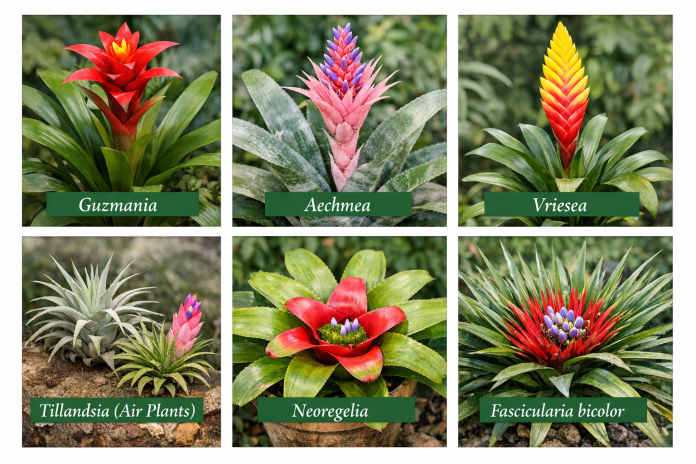
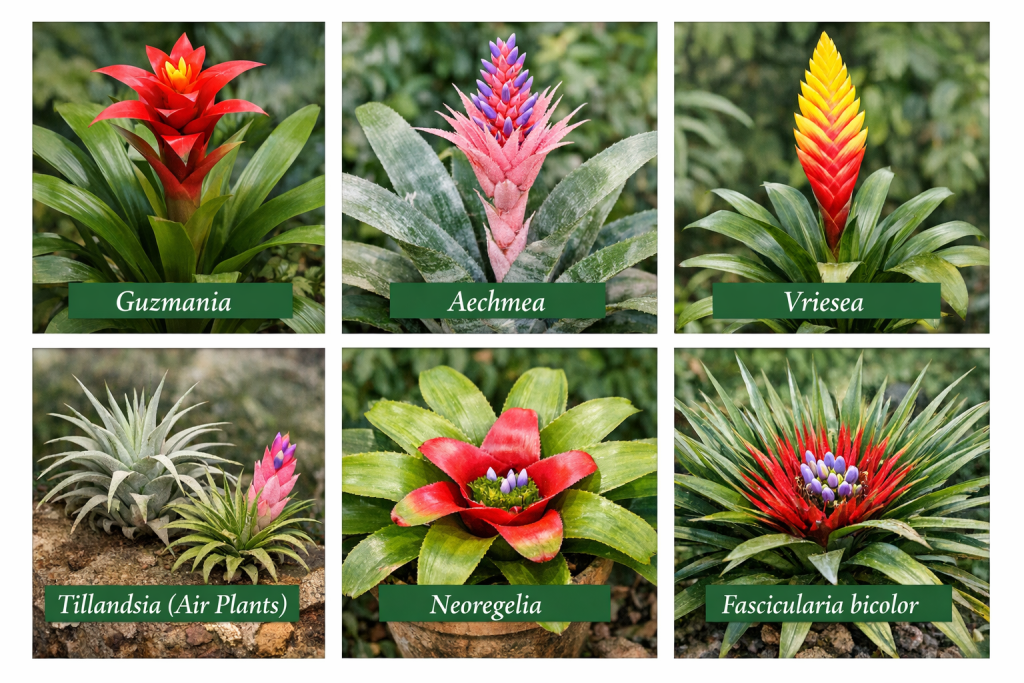
Bromeliads vary in size, colour, and growing requirements. Key types for UK gardeners include:
- Neoregelia – Compact, colourful rosette forms; ideal for indoor pots or glasshouses.
- Guzmania – Bright, tubular flowers in red, orange, or yellow; prefers warm, humid conditions.
- Aechmea – Large, striking flowers; can tolerate lower light levels.
- Tillandsia (Air Plants) – Epiphytic and versatile; require minimal soil.
- Vriesea – Elegant, long-lasting flower spikes; indoor or greenhouse culture.
Tip: Select varieties suited to your indoor or greenhouse space. In the UK, only hardy species like Aechmea ‘Blue Rain’ can survive sheltered outdoor spots in summer.
2. Light Requirements
Bromeliads need bright, indirect light.
- Indoor: Place near an east- or west-facing window. Avoid direct midday sun, which can scorch leaves.
- Greenhouse: Filter strong sun with shade cloth during summer.
- Outdoor (summer only): Bright but sheltered spots, preferably dappled shade under trees.
Tip: Leaf colour can indicate light stress – pale leaves mean too little light; scorched or brown tips mean too much.
3. Temperature and Humidity
- Temperature: Most bromeliads prefer 15–25°C. Avoid exposure below 10°C.
- Humidity: High humidity (50–70%) is ideal. Indoor growers can use pebble trays, humidifiers, or misting.
- Winter care: Bring sensitive species indoors or into a heated greenhouse.
4. Watering
Bromeliads are adapted to capture water in their central “cup” (the rosette of leaves).
- Central cup method: Keep the central cup filled with water, refreshed every 1–2 weeks to prevent stagnation.
- Soil watering: Lightly water the soil or epiphytic mix; allow it to dry slightly between waterings.
- Avoid overwatering: Too much water in the soil can cause root rot.
Tip: Use rainwater or distilled water if tap water is very hard.
5. Soil and Potting
- Epiphytic bromeliads: Use a free-draining orchid or epiphyte mix (bark, perlite, sphagnum moss).
- Terrestrial types: Use a light, well-draining mix with some compost.
- Potting: Bromeliads do not need large pots. Repot only when offsets (pups) fill the container.
Tip: Ensure good drainage. Bromeliads dislike sitting in waterlogged soil.
6. Feeding
- Use a diluted, balanced liquid fertilizer (e.g., 10:10:10 NPK) every 4–6 weeks during the growing season.
- Apply fertilizer to the soil or as a very weak foliar spray.
- Avoid over-fertilising the central cup; this can burn the plant.
Tip: Some growers use bromeliad-specific fertilizers for best colour and bloom.
7. Flowering and Propagation
- Bromeliads usually flower once in their lifetime. After flowering, the plant slowly dies but produces pups (offsets) at the base.
- Propagation:
- Wait until pups are 1/3–1/2 the size of the parent plant.
- Carefully remove using a sterilised knife.
- Pot separately in a suitable mix.
Tip: Regularly separate pups to maintain healthy growth and encourage more flowering.
8. Outdoor Growing in the UK
- Summer: Many bromeliads can thrive outside in sheltered, frost-free areas.
- Winter: Sensitive species must be brought indoors or into a heated greenhouse.
- Mulch pots to protect roots from cold and avoid leaving them in waterlogged soil.
9. Common Pests and Problems
- Mealybugs: Remove with alcohol-soaked cotton or insecticidal soap.
- Scale insects: Treat with horticultural oil or soap.
- Leaf scorch: Usually caused by too much direct sun.
- Root rot: Often due to poor drainage or overwatering.
Tip: Inspect pups before planting; pests often hide in new growth.
10. Display Ideas
- Indoor: Groups of bromeliads in decorative pots or terrariums.
- Outdoor summer displays: Combine with ferns, palms, or tropical bedding for a lush look.
- Wall or hanging displays: Tillandsias can be mounted on driftwood or in wire baskets.
Summary Tips for UK Gardeners
- Bright, indirect light is essential.
- Keep the central cup filled with water but avoid soggy soil.
- Maintain moderate warmth and humidity.
- Propagate pups to extend your collection.
- Protect sensitive species from frost in winter.
Bromeliad Grow Guide – UK (Quick Reference)
| Care Aspect | Guidance |
|---|---|
| Light | Bright indirect light indoors. Outdoors: dappled shade, avoid direct midday sun. Some Neoregelia or Aechmea varieties tolerate light morning sun. |
| Temperature / Hardiness | Ideal: 15–25°C. Minimum: 10°C. UK hardiness: USDA zones 10–11 equivalent (very tender outdoors; bring indoors/greenhouse in winter). |
| Humidity | 50–70%. Mist leaves or use pebble tray/humidifier indoors. |
| Watering | Keep central cup filled; refresh every 1–2 weeks. Lightly water soil/epiphytic mix; allow to dry slightly. Avoid waterlogging. |
| Soil / Potting | pH: slightly acidic to neutral, ~5.5–6.5. Epiphytic mix: bark, perlite, sphagnum moss. Terrestrial: light, free-draining with some compost. Repot only when pups fill pot. |
| Fertilizer | Diluted balanced liquid fertilizer (10:10:10 NPK) every 4–6 weeks in growing season. Avoid overfeeding central cup. |
| Flowering & Propagation | Flowers once. Produces pups after flowering. Remove pups when 1/3–1/2 size of parent and pot separately. |
| Pests & Problems | Mealybugs & scale: treat with alcohol or horticultural soap. Leaf scorch: too much sun. Root rot: overwatering/poor drainage. |
| Outdoor Tips (UK) | Summer: sheltered, frost-free, dappled shade. Winter: indoors/greenhouse. Mulch pots to protect roots. |
Quick Display Ideas
- Indoor: Decorative pots, terrariums, grouped collections.
- Outdoor (summer only): Combine with ferns, palms, tropical bedding.
- Wall/hanging: Tillandsias on driftwood or in baskets.
With care, bromeliads bring a year-round tropical splash to any UK home or greenhouse and reward gardeners with vivid foliage and stunning flowers.