
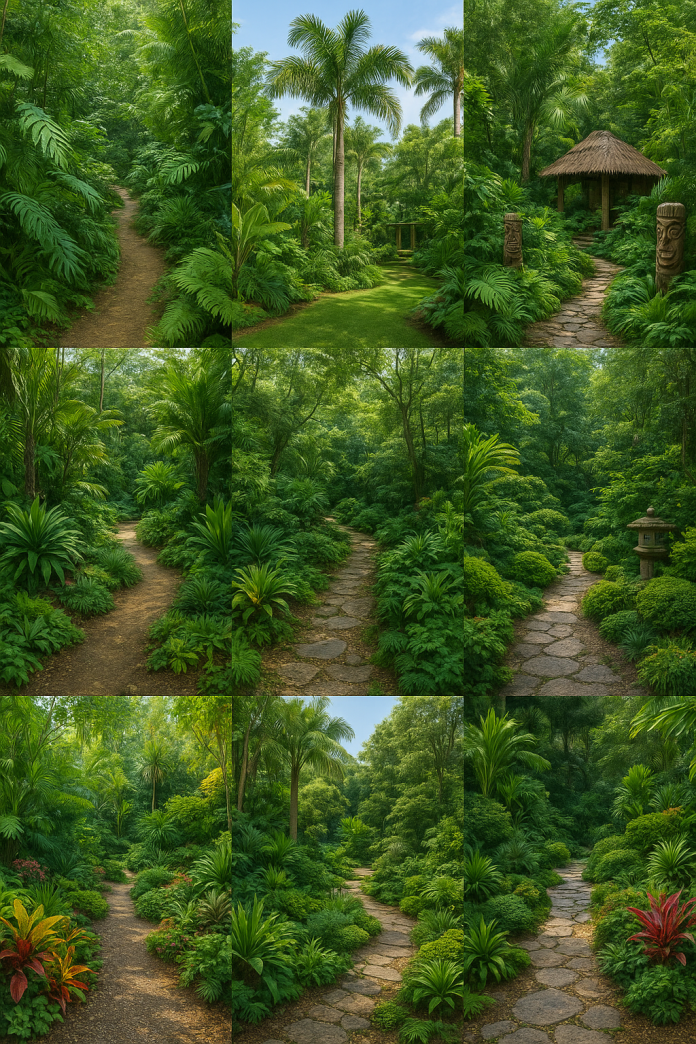
A tropical garden succeeds when it feels intentional. Without a clear theme, even the best plants look confused. In the UK, where climate already limits choices, a theme becomes a filter—guiding what you plant, how you build, and what you leave out.
A theme is not about strict geography. It is about:
- Mood
- Structure
- Foliage type
- Density
- Colour and texture
You can grow bananas in a Japanese garden or palms in an African one—but how they are used must be consistent.
1. South American Jungle
Lush, immersive, dramatic
This is the classic UK tropical look and one of the easiest to achieve if shelter and soil are good.
Defining Features
- Huge leaves
- Dense, overlapping planting
- Fast summer growth
- High humidity feel
Visual Language
- Little bare ground
- Plants touching and leaning
- Height layered from ground to canopy
Structural Approach
- Enclosed spaces
- Curving paths
- Pergolas, trellis, fences hidden by foliage
Best Suited To
- Sheltered gardens
- Gardeners happy with feeding and watering
- Those who want maximum impact in summer
2. Hawaiian / Pacific Tropical
Relaxed, open, architectural
Often confused with jungle planting, this style is actually cleaner and more spaced.
Defining Features
- Strong architectural plants
- Fewer species
- Open sight lines
- Resort-style atmosphere
Visual Language
- Bold shapes
- Palms, bananas, cordylines
- Grasses and open ground
Structural Approach
- Decking
- Raised beds
- Open pergolas
- Strong horizontals
Best Suited To
- Sunny, open gardens
- Coastal or mild areas
- Gardeners who prefer clarity over chaos
3. Tiki / Polynesian Style
Playful, theatrical, immersive
This is a designed fantasy rather than a botanical one, and it works best when fully committed.
Defining Features
- Dramatic foliage
- Dense planting
- Decorative features
Visual Language
- Large leaves
- Deep shade pockets
- Strong contrast between light and dark
Structural Approach
- Timber screens
- Thatched or bamboo-style features
- Carved posts, masks, lighting
Caution
This style fails when:
- Planting is sparse
- Ornamentation overwhelms plants
- It lacks maturity
It requires confidence and restraint to avoid kitsch.
4. African Tropical / Subtropical
Bold, sculptural, drought-tolerant
African-inspired tropical gardens are about form rather than lushness.
Defining Features
- Strong silhouettes
- Tough, architectural plants
- Space and light
Visual Language
- Spikes, fans, upright forms
- Less layering
- Earthy colours
Structural Approach
- Gravel
- Stone
- Concrete
- Minimalist layout
Best Suited To
- Hot, dry, sunny gardens
- Free-draining soil
- Gardeners who want lower summer watering
5. East Asian Forest
Layered, naturalistic, timeless
This is one of the most sustainable long-term tropical styles for the UK.
Defining Features
- Woodland canopy
- Understorey planting
- Seasonal rhythm
Visual Language
- Ferns, gingers, aralias
- Dappled shade
- Natural transitions
Structural Approach
- Informal paths
- Minimal hard edges
- Emphasis on trees and shrubs
Best Suited To
- Larger gardens
- Partial shade
- Gardeners playing the long game
6. Japanese Subtropical
Controlled, elegant, deliberate
Not lush in the jungle sense, but deeply effective when executed well.
Defining Features
- Strong structure
- Limited plant palette
- Year-round interest
Visual Language
- Form over foliage mass
- Space and balance
- Pruning as design
Structural Approach
- Stone
- Gravel
- Timber
- Framed views
Best Suited To
- Small gardens
- Shaded sites
- Gardeners who value discipline and calm
7. Caribbean Tropical
Bright, colourful, exuberant
This style leans into colour and contrast, not just foliage.
Defining Features
- Colourful leaves and flowers
- Strong light
- Energy and movement
Visual Language
- Variegation
- Flowers among foliage
- High contrast
Structural Approach
- Painted walls or fences
- Render
- Simple, bold hard landscaping
Best Suited To
- Sunny gardens
- Gardeners willing to replant annually
- Containers and seasonal displays
8. Mediterranean-Tropical Hybrid
Dry, sun-baked, architectural
This style blends subtropical planting with Mediterranean structure.
Defining Features
- Palms
- Agaves and yuccas
- Gravel and stone
Visual Language
- Open planting
- Strong geometry
- Sun and shadow
Best Suited To
- South-facing gardens
- Free-draining soil
- Minimal winter wet
9. Mixing Themes – How to Do It Without Ruining the Garden
Mixing themes is risky but possible.
Rules:
- Choose one dominant theme
- Use others as accents only
- Keep materials consistent
- Avoid mixing dense jungle with minimalist styles
A garden cannot be:
- Jungle
- Japanese
- Desert
all at once.
10. Choosing Your Theme Wisely
Ask yourself:
- How much sun and shelter do I have?
- Do I enjoy dense planting or open space?
- How much winter work will I tolerate?
- Do I want drama or calm?
Your theme should:
- Match your site
- Match your temperament
- Look convincing even in winter
Final Thought
A tropical garden is not made by plants alone.
It is made by decisions, and the first decision is what kind of place you are trying to create.
Once the theme is chosen, every plant either belongs—or it doesn’t.