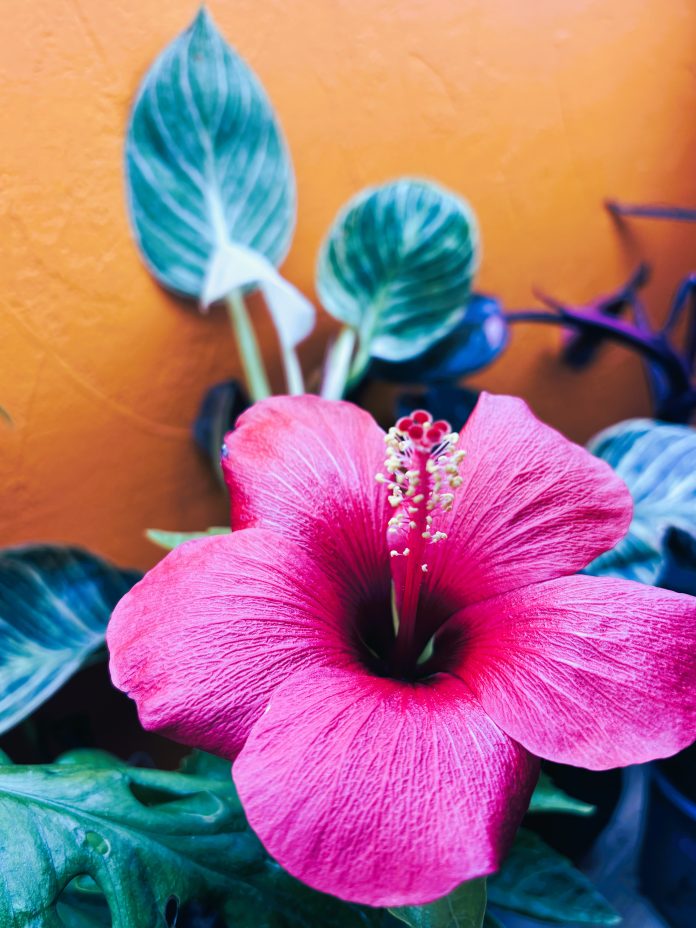
Hibiscus are celebrated for their spectacular flowers, but their hardiness varies widely depending on the species. Understanding which hibiscus can survive your winter is key to enjoying these plants year after year.
1. Tropical Hibiscus (Hibiscus rosa-sinensis)
- Hardiness: Only to around 0 °C
- Type: Evergreen shrub
- Flowering: Summer to autumn
- Notes:
- Cannot survive frost.
- In temperate climates like the UK, they are best grown in pots, brought indoors or into a greenhouse over winter.
- Continuous feeding with a high-potash fertiliser encourages abundant blooms.
Tip: Even a few degrees below freezing can damage tropical hibiscus leaves and stems. Always move them indoors before the first frost.
2. Hardy Shrub Hibiscus (Hibiscus syriacus)
- Hardiness: Down to –15 °C or lower
- Type: Deciduous shrub
- Flowering: Mid to late summer
- Notes:
- Fully hardy in most of the UK.
- Produces flowers later than many summer shrubs, making it valuable for adding colour in late summer.
- Minimal winter protection is needed, though young plants benefit from a mulch layer.
3. Hardy Herbaceous Hibiscus (Hibiscus moscheutos and hybrids)
- Hardiness: Down to –20 °C
- Type: Herbaceous perennial
- Flowering: Late summer, large “dinner-plate” flowers
- Notes:
- Dies back completely in winter, regenerating from the roots in spring.
- Perfect for borders in cold regions.
- Requires full sun and moist, well-drained soil to thrive.
4. Factors Affecting Hibiscus Hardiness
Even within the same species, microclimate and care affect survival:
- Shelter from wind: Reduces frost damage.
- Soil drainage: Waterlogged soil in winter can kill roots.
- Container vs. ground planting: Potted plants are more vulnerable but easier to protect.
- Mulching: Especially important for herbaceous varieties to protect roots.
✅ Summary
- Tropical hibiscus: tender, frost-sensitive, winter indoors
- Hibiscus syriacus: fully hardy, deciduous, minimal winter care
- Hibiscus moscheutos: extremely hardy, dies back completely, ideal for colder areas
By choosing the right species and providing appropriate protection, gardeners can enjoy the beauty of hibiscus in almost any climate.
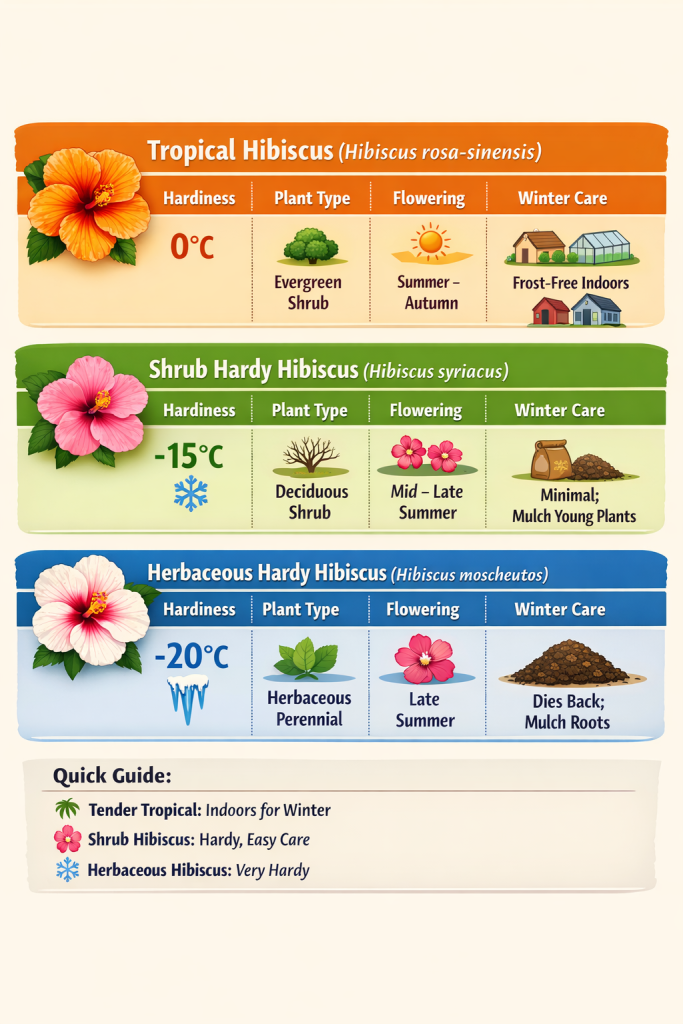
| Hibiscus Type | Hardiness (°C) | Plant Type | Flowering Season | Winter Care |
|---|---|---|---|---|
| Tropical Hibiscus (Hibiscus rosa-sinensis) | 0 °C | Evergreen shrub | Summer – Autumn | Frost-free indoor or greenhouse |
| Shrub Hardy Hibiscus (Hibiscus syriacus) | –15 °C | Deciduous shrub | Mid – Late Summer | Minimal; mulch young plants |
| Herbaceous Hardy Hibiscus (Hibiscus moscheutos) | –20 °C | Herbaceous perennial | Late Summer | Dies back; mulch roots |
Quick Guide:
- Tender tropical hibiscus: enjoy summer outdoors, move inside for winter.
- Hibiscus syriacus: plant in borders, minimal winter prep.
- Hibiscus moscheutos: ideal for colder regions, dramatic flowers, dies back completely each winter.