
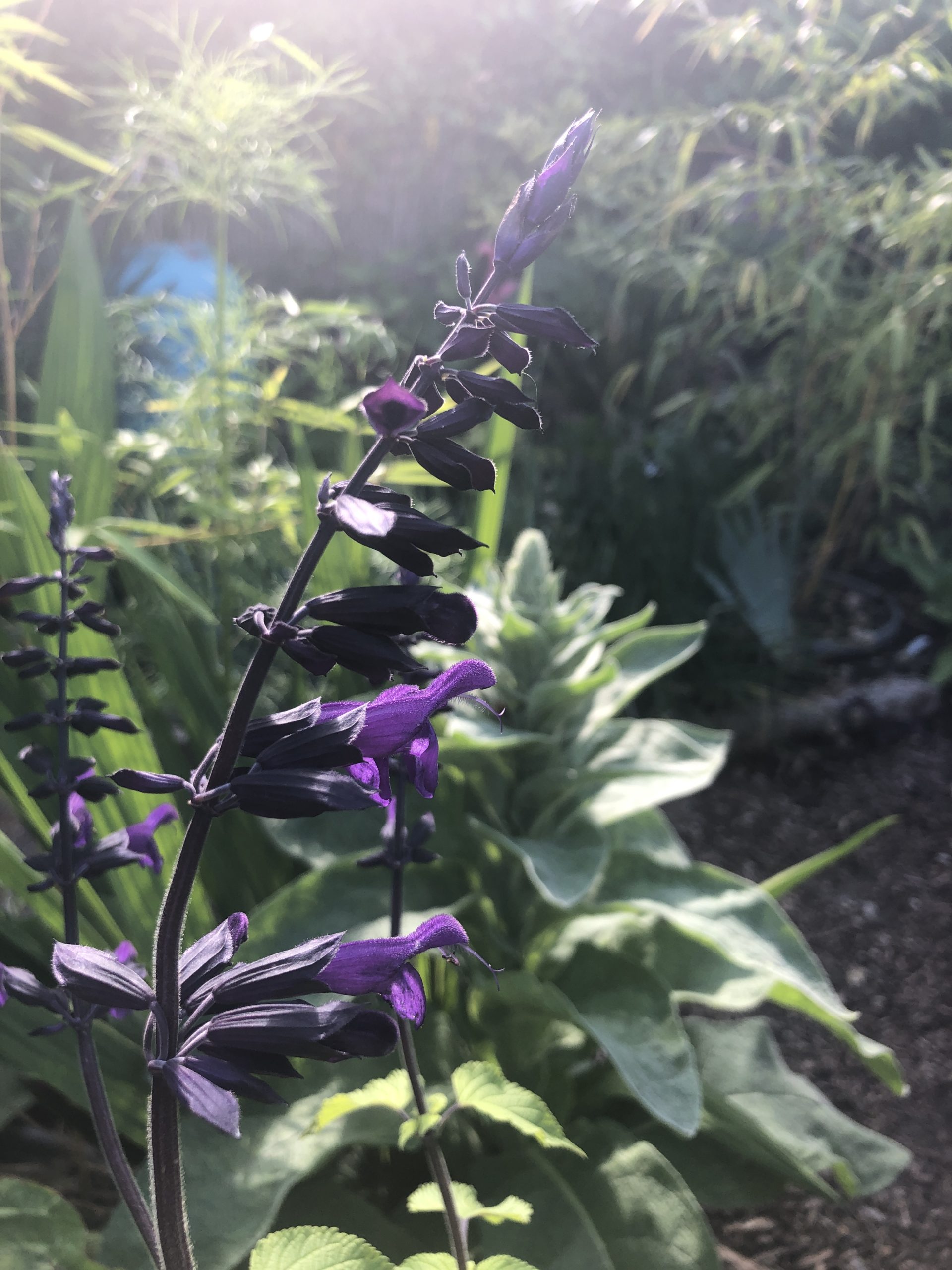
Salvia ‘Amistad’ is a beautiful perennial plant known for its striking deep purple flowers and velvety green leaves. Here’s a guide on how to grow Salvia ‘Amistad’:
- Climate and location: Salvia ‘Amistad’ thrives in warm climates, ideally in USDA hardiness zones 8-11. It requires full sun to partial shade. Choose a location in your garden that receives at least 6-8 hours of direct sunlight each day.
- Soil preparation: The plant prefers well-draining soil with good organic matter content. Prepare the soil by loosening it with a garden fork or tiller. Incorporate compost or well-rotted manure into the soil to improve its fertility and drainage.
- Planting: Plant Salvia ‘Amistad’ in the spring after the last frost date in your area. Dig a hole that is slightly larger than the root ball of the plant. Place the plant in the hole, making sure the top of the root ball is level with the soil surface. Fill the hole with soil and gently firm it around the plant.
- Watering: After planting, water the Salvia ‘Amistad’ thoroughly to help establish its roots. Once established, the plant is somewhat drought-tolerant but will perform best with regular watering. Water deeply whenever the top inch of soil feels dry. Avoid overwatering, as excessive moisture can lead to root rot.
- Mulching: Apply a layer of organic mulch, such as wood chips or bark, around the base of the plant. Mulching helps retain soil moisture, suppresses weeds, and regulates soil temperature.
- Fertilization: Salvia ‘Amistad’ benefits from occasional feeding. Use a balanced slow-release fertilizer or a liquid fertilizer with a higher phosphorus content to promote flower production. Follow the manufacturer’s instructions for application rates and frequency.
- Pruning: Prune Salvia ‘Amistad’ in early spring or late winter before new growth begins. Cut back the old stems to about 6-8 inches above the ground to encourage fresh growth and a more compact shape. Deadhead spent flowers regularly to promote continuous blooming.
- Winter care: In colder regions, Salvia ‘Amistad’ may not be fully hardy. Apply a layer of mulch around the base of the plant in late fall to protect it from frost and cold temperatures. Alternatively, you can also dig up the plant and overwinter it indoors in a cool, bright location.
- Propagation: Salvia ‘Amistad’ can be propagated through stem cuttings. Take 3-4 inch long cuttings from healthy, non-flowering stems in late spring or early summer. Remove the lower leaves and dip the cut end in a rooting hormone powder. Plant the cuttings in well-draining soil and keep them moist until roots develop.