
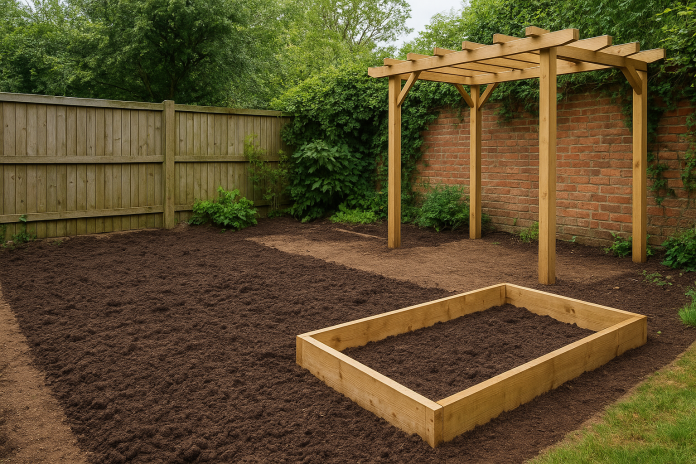
A practical foundation guide for long-term success
A tropical garden in the UK is not about copying the tropics plant-for-plant. It is about engineering warmth, shelter, moisture, and scale, then choosing plants that exploit those conditions. Get the groundwork right and the planting becomes easy. Get it wrong and you’ll fight the climate forever.
This guide focuses on the three fundamentals that determine success:
- Soil preparation
- Boundaries and shelter
- Structural framework
Only once these are established should planting begin.
1. Soil Preparation – Creating a Warm, Living Root Zone
Tropical-style plants are heavy feeders, fast growers, and often shallow rooted. In the UK, soil is frequently compacted, cold, and slow to warm in spring. Improving soil is not optional—it is the single most important job.
1.1 Start With Drainage (Even for “Bog” Plants)
Many tropical plants like moisture, but none tolerate stagnant, airless soil in winter.
Check drainage
- Dig a hole 30cm deep and fill with water
- If it hasn’t drained within 2–3 hours, you must improve it
Improve poor drainage by:
- Digging deeply (at least 40–50cm where possible)
- Breaking through any compacted layers
- Adding organic matter and grit if the soil is clay-heavy
- Raising beds where necessary (even 10–20cm helps)
In UK tropical gardens, raised ground is often more important than added heat.
1.2 Organic Matter: The Engine of a Tropical Garden
Tropical planting depends on rich, biologically active soil.
Add organic matter generously:
- Well-rotted garden compost
- Leaf mould (excellent for moisture retention)
- Composted bark fines
- Manure (fully rotted only)
Aim for:
- At least 30–40% organic matter in the top 30–40cm of soil
- A soil that is dark, crumbly, and alive with worms
Avoid:
- Fresh manure
- Peat-based composts as a soil conditioner (fine in pots, not beds)
1.3 Soil Warming and Spring Readiness
Cold soil delays growth and reduces plant vigour.
Ways to warm soil naturally:
- Dark organic mulch (absorbs heat)
- Raised beds
- South- or west-facing positions
- Shelter from cold winds (see boundaries below)
Mulch is essential:
- Apply a thick mulch every spring
- Top up again in autumn to protect soil life over winter
2. Boundaries – Shelter Is Everything
In the UK, wind is the enemy of tropical planting, more than cold alone.
Large leaves tear, plants lose moisture, and growth stalls. Creating shelter transforms what you can grow.
2.1 Create a Microclimate
A tropical garden works best as a series of enclosed spaces, not an open lawn with exotic plants dotted about.
Good boundary options:
- Timber fencing (solid or hit-and-miss)
- Brick or rendered walls
- Dense evergreen hedging
- Layered planting with shrubs and small trees
Ideal height:
- 1.8–2m minimum for meaningful wind reduction
Even partial shelter:
- Raises night temperatures
- Reduces evaporation
- Prevents leaf damage
- Encourages taller, lusher growth
2.2 Use Boundaries as Heat Stores
Hard boundaries absorb heat during the day and release it at night.
Best materials:
- Brick
- Stone
- Rendered blockwork
- Dark-painted timber
South- and west-facing walls are prime planting zones for:
- Bananas
- Gingers
- Large-leaved climbers
- Tender perennials
2.3 Visual Boundaries Matter Too
A tropical garden should feel enclosed and immersive.
Use boundaries to:
- Hide neighbouring buildings
- Block long views
- Create a sense of depth and mystery
This allows plants to feel larger and more dramatic than they actually are.
3. Structures – The Skeleton of the Garden
Before planting anything substantial, decide on the structural framework. Tropical gardens rely heavily on structure because herbaceous plants disappear in winter.
3.1 Hard Landscaping First
Install hard features before planting:
- Paths
- Decking
- Raised beds
- Seating areas
- Water features
Why?
- Avoids root disturbance later
- Sets sight lines and scale
- Allows planting to soften edges rather than define them
Materials that suit tropical gardens:
- Timber
- Stone
- Concrete
- Gravel (especially dark or warm-toned)
Avoid fussy detailing. Bold, simple forms work best.
3.2 Vertical Structures for Height and Drama
Height is essential for a tropical look.
Consider:
- Pergolas
- Trellis panels
- Obelisks
- Arches
- Posts for climbers
These allow:
- Fast vertical impact
- Use of climbers and scrambling plants
- Layering of foliage at different heights
Painted or stained dark colours help structures recede visually behind foliage.
3.3 Plan for Scale From the Start
Tropical plants grow big—very big.
Before planting, ask:
- What will this look like in 3–5 years?
- Will it crowd paths?
- Will it shade other plants?
Leave generous spacing:
- It fills quicker than you expect
- Overcrowding leads to weak growth and winter losses
4. Ground Levels and Planting Zones
Varying ground height adds instant maturity.
Use:
- Raised beds
- Berms
- Gentle slopes
This:
- Improves drainage
- Creates warmer planting pockets
- Adds visual drama
Think in layers:
- Ground cover and low perennials
- Mid-layer shrubs and large herbaceous plants
- Tall architectural plants and small trees
5. Before You Plant: A Final Checklist
Before buying plants, ensure:
- Soil is deep, fertile, and free-draining
- Shelter is in place or planned
- Structures are installed
- Irrigation is considered (hose access or water butts)
- You understand winter storage needs for tender plants
A tropical garden is built, not planted.
Next Steps
Once these foundations are complete, the next stage is:
- Choosing the right core structural plants
- Choosing the right tropical theme
- Deciding which plants stay out year-round
- Planning winter protection and storage