
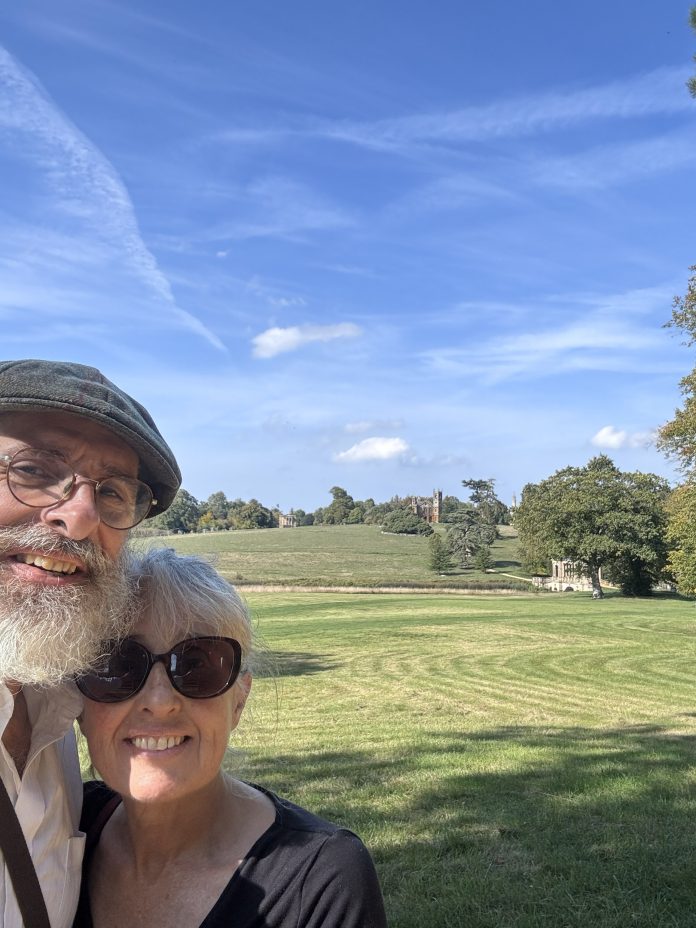
Stowe Gardens in Buckinghamshire is best understood not as a collection of plants, but as a carefully constructed historical landscape. For visitors interested in gardens as cultural artefacts—where buildings, symbolism, and landform matter as much as planting—Stowe remains one of the most influential gardens ever created in Britain.
Although not a tropical garden in the horticultural sense, Stowe offers valuable lessons for today’s tropical-style gardeners: structure first, planting second. It is a place where bold form, scale, and architectural drama create atmosphere long before individual plants are noticed.
The Historical Landscape
Developed during the early to mid-18th century, Stowe reflects a period when gardens were used to express power, education, and political belief. The estate was shaped over several decades by key figures in garden history, including Charles Bridgeman, William Kent, and later Lancelot “Capability” Brown. Each left a distinct mark, making Stowe a living timeline of the transition from formal design to the English landscape style.
The garden was commissioned by Richard Temple, Viscount Cobham, whose Whig political ideals are embedded throughout the landscape. Unlike purely decorative gardens, Stowe was designed to be read and interpreted. Paths lead the visitor through a sequence of spaces, each reinforced by buildings and monuments that reference classical history, virtue, liberty, and moral responsibility.
Architecture as the Garden’s Backbone
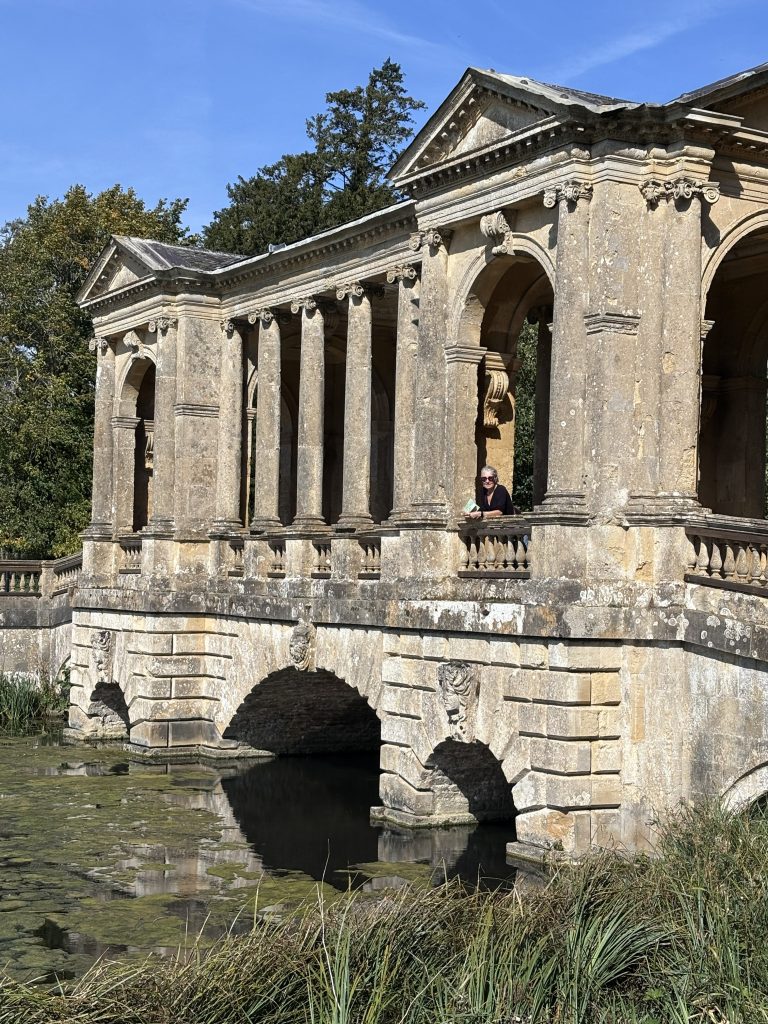
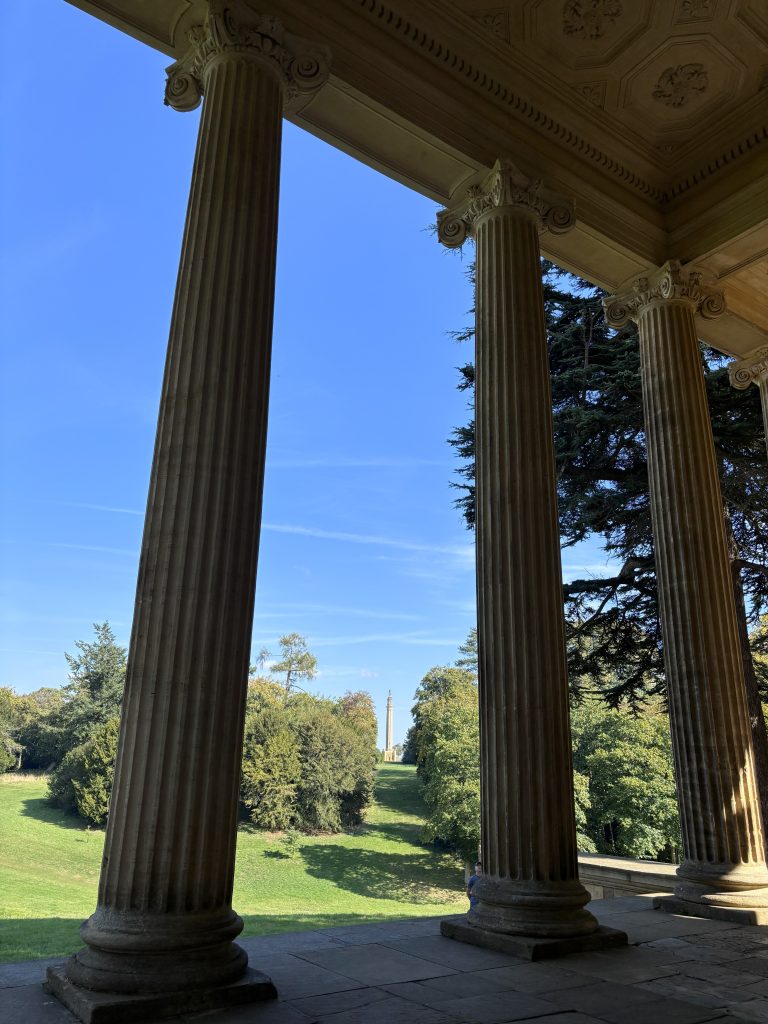
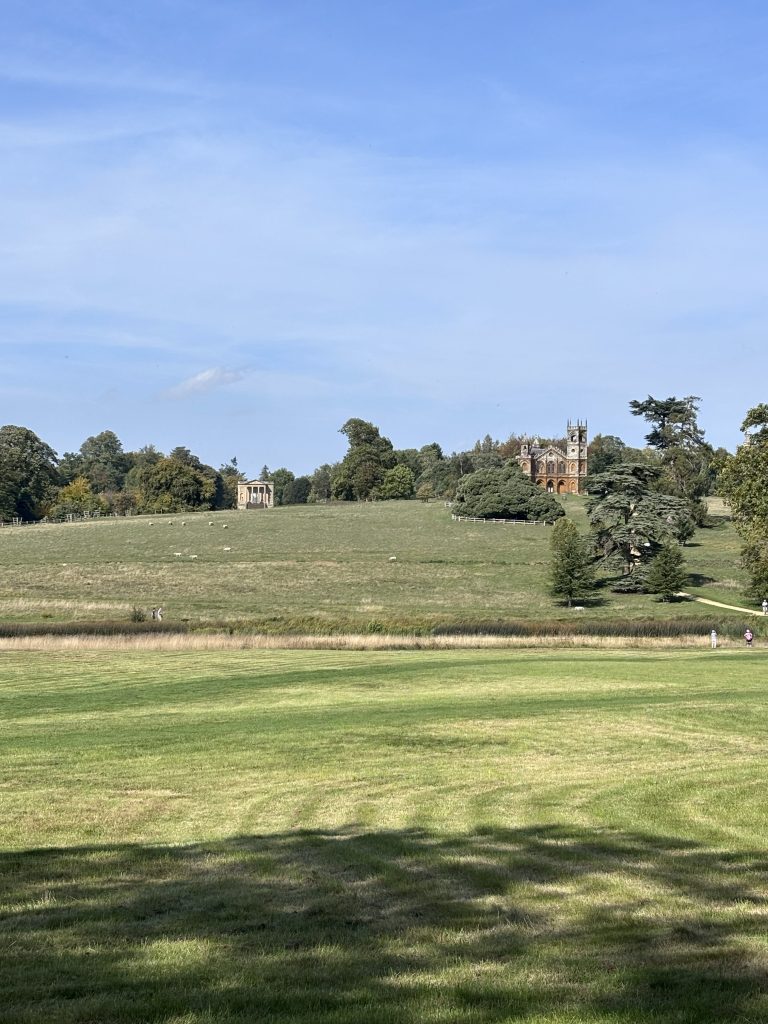
What truly defines Stowe is its architecture. Temples, arches, bridges, and monuments are positioned with extraordinary precision, acting as anchors within the vast landscape. The Temple of British Worthies, the Temple of Ancient Virtue, the Palladian Bridge, and the Rotunda are not ornamental extras—they are the framework that gives the garden meaning and direction.
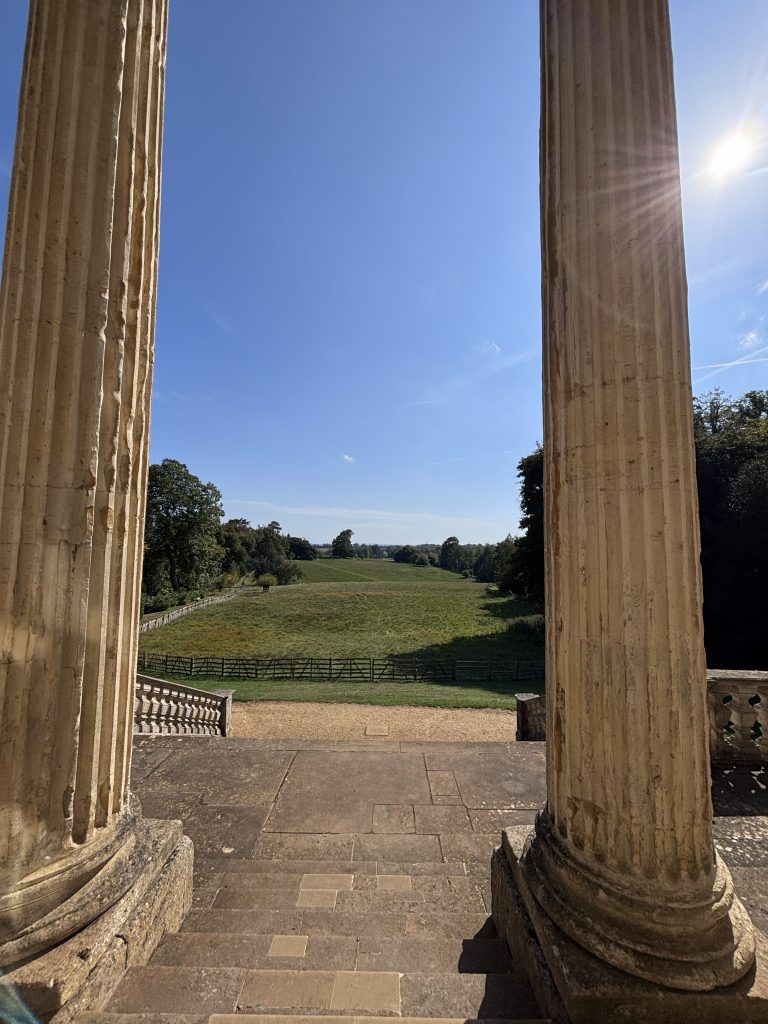
These buildings create focal points, frame views, and control movement through the garden. Long before colourful planting became fashionable, Stowe demonstrated how hard landscape elements could shape emotion and experience. For modern tropical gardeners, this reinforces an essential principle: dramatic impact comes from strong bones—paths, structures, and bold shapes—before any exotic planting is added.
Planting as Support, Not Spectacle
Planting at Stowe is deliberately restrained. Trees dominate: mature oaks, beeches, limes, and cedars establish scale and permanence, while lawns act as visual breathing space. Shrubs and ornamental planting are used sparingly, ensuring that buildings and vistas remain uninterrupted.
This approach offers a useful counterpoint to modern tropical gardening, which often focuses heavily on foliage effects. Stowe reminds us that even the most dramatic plants need a strong setting. In tropical-style gardens, architectural planting works best when supported by clear structure—just as Stowe’s monumental buildings rely on open space and controlled planting to achieve their impact.
Restoration and Present-Day Management
Now under the care of the National Trust, Stowe is the subject of ongoing restoration. Reinstating lost views, repairing historic buildings, and managing tree cover are complex tasks, particularly on this scale. While some areas inevitably feel carefully managed, the overall atmosphere remains expansive and dignified.
Interpretation across the site helps visitors understand the historical and political layers of the garden, adding depth to what might otherwise be seen as a picturesque parkland. Importantly, restoration has focused on reinstating structure and sightlines rather than introducing unnecessary planting, staying true to the garden’s original intent.
Why Stowe Still Matters
Stowe Gardens is a masterclass in using landscape and buildings to tell a story. Its influence can be seen in country estates across Britain and beyond, and its lessons remain relevant today. For those creating tropical-style gardens—particularly in the UK—Stowe offers a powerful reminder that atmosphere, drama, and longevity come from design decisions made before the first plant goes in.
This is not a garden of colour or novelty, but of ideas, architecture, and ambition. Stowe asks the visitor to slow down, look outward, and think beyond planting. In doing so, it earns its place as one of the most important historic gardens in the country.