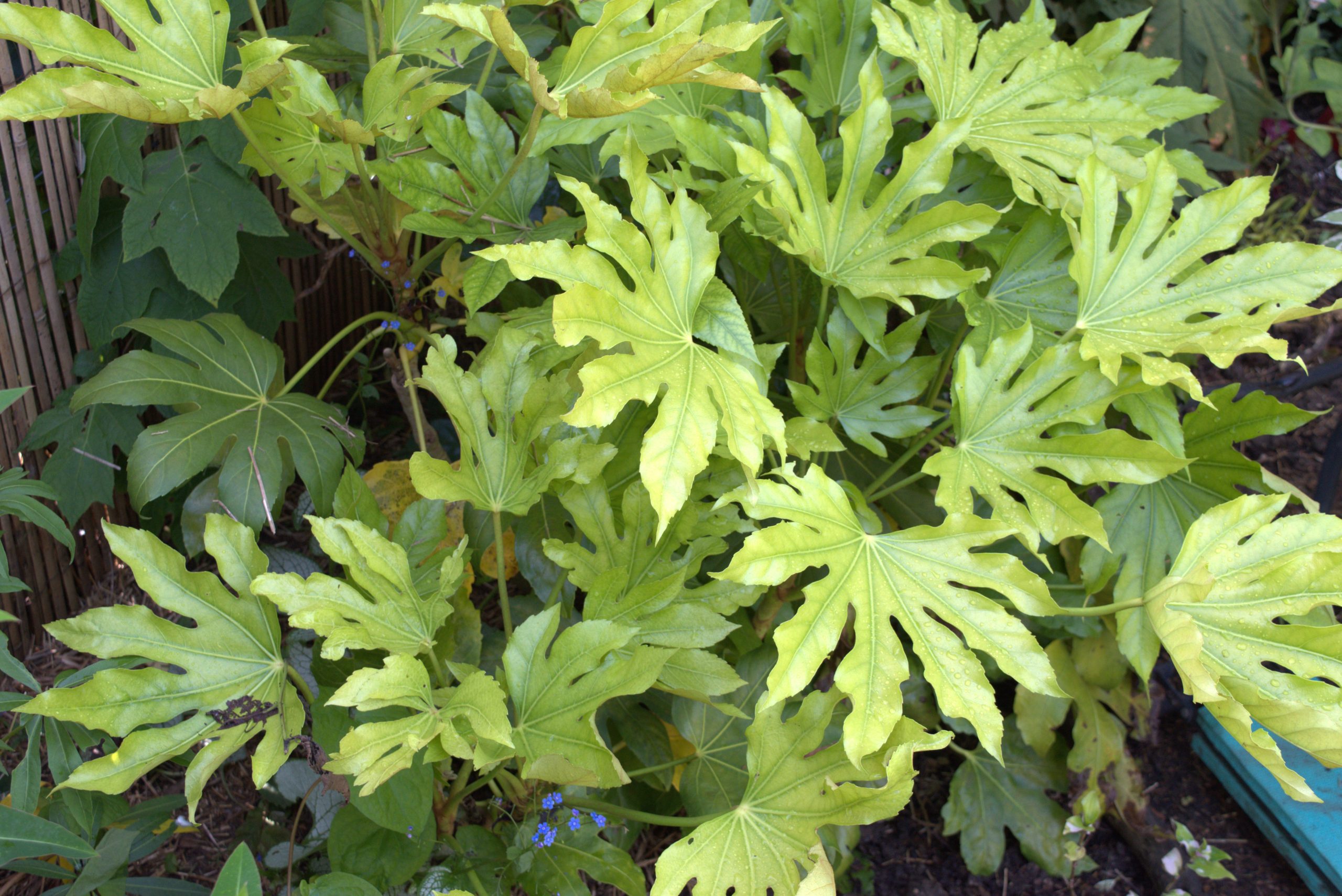
Fatsia is a small genus of evergreen shrubs and small trees that are well-suited to UK gardens, especially those with a tropical theme. Here are the main types of Fatsia for a UK garden:
Types of Fatsia
- Fatsia japonica:
- The most common species, known for its large, glossy, palmate leaves.
- Very hardy and can withstand temperatures down to around -10°C.
- Fatsia japonica ‘Variegata’:
- Features striking white or cream-edged leaves.
- Adds visual interest with its variegation.
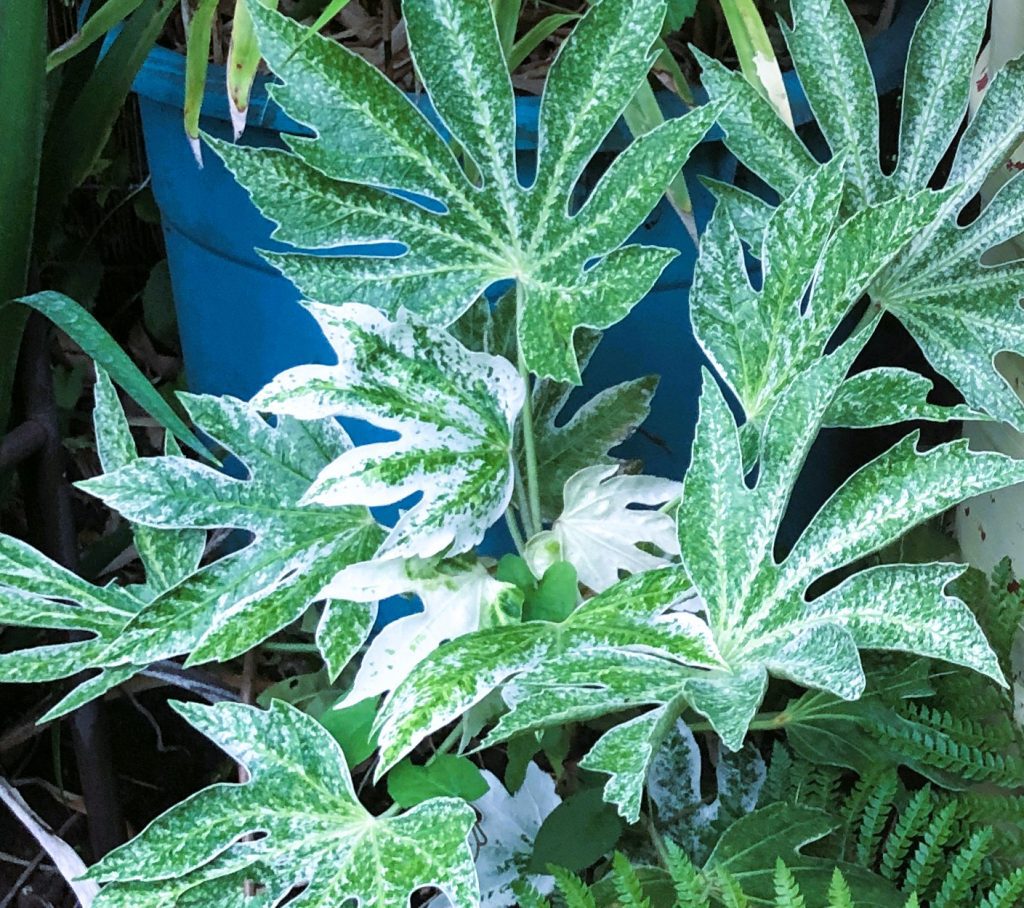
- Fatsia japonica ‘Spider’s Web’:
- Leaves are mottled with white, resembling a spider’s web.
- Offers a unique texture and color contrast.
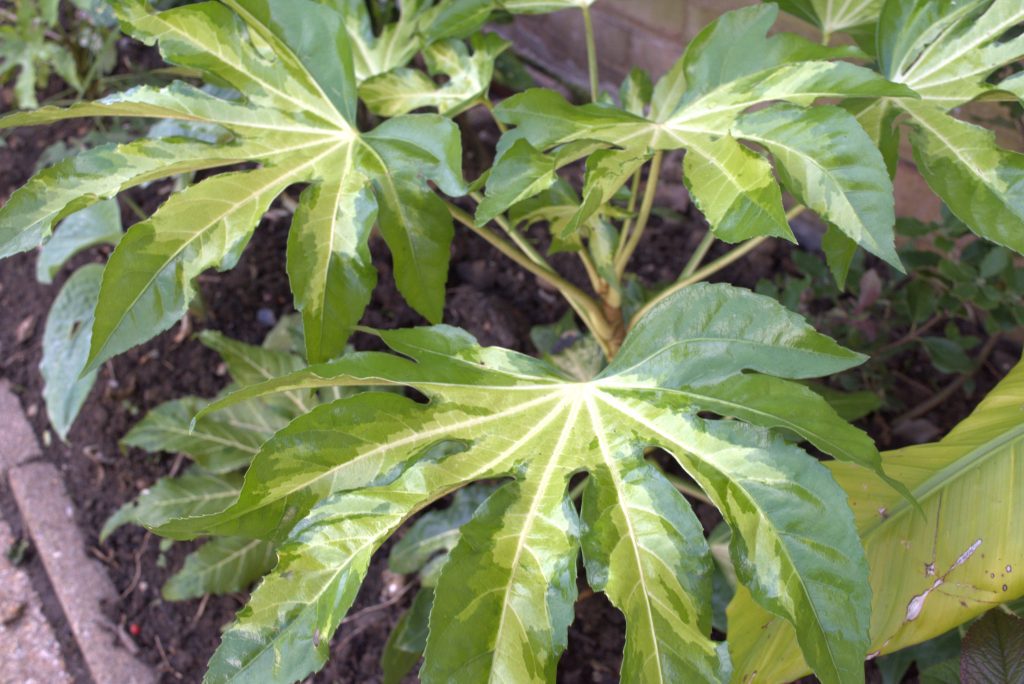
- Fatsia japonica ‘Camouflage’:
- Distinctive variegated foliage with green and creamy white patches, resembling a camouflage pattern.
- Adds an exotic and unique appearance to the garden.
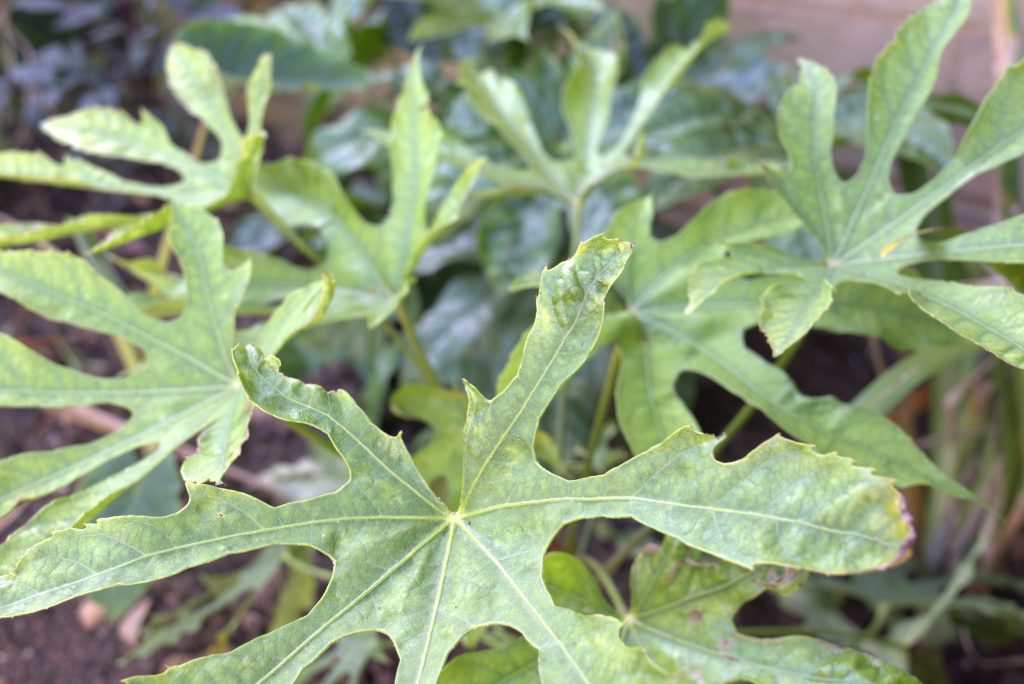
- Fatsia polycarpa:
- Known as the Taiwanese aralia.
- Larger and more deeply lobed leaves than Fatsia japonica.
- Can be grown in the UK with some protection from severe frosts.
Planting and Care Tips for Fatsias
Location:
- Light: Plant in partial shade to full shade. They tolerates some morning sun but prefers sheltered spots away from harsh, direct sunlight.
- Soil: Well-draining soil rich in organic matter. Prefer slightly acidic to neutral pH levels.
Planting Time:
- Best planted in spring or autumn when the soil is moist and temperatures are moderate. Avoid extreme weather conditions.
Spacing:
- Allow approximately 1 to 1.5 meters between plants for good air circulation and to prevent overcrowding.
Watering:
- Keep soil consistently moist, especially during dry spells, but avoid waterlogging. Water deeply and regularly, allowing the top inch of soil to dry out between watering sessions.
Mulching:
- Apply a layer of organic mulch around the base to retain moisture, suppress weeds, and regulate soil temperature. Keep mulch away from the stem to prevent rot.
Fertilizing:
- Feed with a balanced, slow-release fertilizer in early spring and mid-summer. Alternatively, use a liquid fertilizer monthly during the growing season.
Pruning:
- Prune in late winter or early spring to remove dead, damaged, or diseased branches. This encourages new growth and maintains the plant’s shape. Trim back to control size and encourage bushier growth.
Winter Protection:
- While hardy, providing protection during severe frosts is beneficial. Mulch heavily in late autumn and cover young plants with fleece during extremely cold weather.
Pest and Disease Management:
- Generally pest-resistant but watch for aphids, spider mites, and scale insects. Treat infestations with insecticidal soap or neem oil. Ensure good air circulation to prevent fungal diseases like powdery mildew.
By incorporating these types of Fatsia and following these planting and care tips, you can create a lush, vibrant, and low-maintenance tropical garden in the UK.